Most fevers can be treated safely at home with proper hydration, rest, and the appropriate use of paracetamol or ibuprofen. The real challenge is knowing when fever treatment at home is safe – and when a rising temperature signals a dangerous infection requiring urgent medical care. This guide explains exactly how to reduce fever, what medicines to use, what to avoid, and the warning signs that should never be ignored.
What Should You Do Right Now?
Before reading further, use this quick decision table to take the right action immediately.
| Your Situation | Recommended Action |
| Fever below 39°C, drinking fluids, no alarming symptoms | Fever treatment at home is appropriate |
| Fever above 39.4°C persisting beyond 24 hours | Contact a doctor today |
| Fever with confusion, seizure, breathing difficulty, or stiff neck | Emergency care immediately |
| Any fever in an infant under 3 months | Emergency evaluation – do not wait |
| Elderly person with confusion and even mild fever | Same-day medical review required |
| Fever not responding after two correct doses of medication | Seek medical guidance |
What Is a Fever?
A fever is a core body temperature of 38°C (100.4°F) or higher. Normal body temperature ranges between 36.1°C and 37.2°C. A reading of 37.5°C is borderline. Anything at or above 38°C is a confirmed fever.
Fever is not a disease – it is a symptom of the immune system actively fighting an infection, inflammation, or other internal threat. In most cases, it means your body is doing exactly what it is designed to do. Managing fever treatment at home effectively starts with understanding what is actually causing the temperature rise.
Common Causes of Fever
- Viral infections: flu, COVID-19, common cold, dengue, chikungunya
- Bacterial infections: strep throat, UTI, pneumonia, typhoid
- Post-vaccination response: mild fever resolving in 1–2 days
- Heat exhaustion or prolonged sun exposure
- Inflammatory conditions: rheumatoid arthritis, lupus flares
Who Is at Higher Risk from Fever?
Certain groups face a greater risk of fever complications and need earlier medical evaluation:
- Infants under 3 months – any fever is an emergency
- Adults over 65 – may not show high temperatures even with serious infection
- Pregnant women – fever can affect fetal development
- People with chronic conditions: diabetes, kidney disease, heart disease, weakened immunity
💡 Key Insight Most Articles Miss: Fever itself rarely causes organ damage unless it exceeds 41°C (105.8°F). Mild to moderate fevers may actually enhance immune function by impairing pathogen replication and speeding up immune cell activity. Suppressing every fever automatically is not always the right clinical decision – focus on comfort and hydration, not just chasing a normal number.
How to Check Temperature Correctly
Using the wrong thermometer method can produce misleading readings and lead to wrong treatment decisions. A forehead thermometer, for example, can read up to 1°C lower than your actual core temperature – meaning a reading of 37.8°C may actually represent a fever of 38.3°C or higher.
Thermometer Accuracy Guide
| Method | Best For | Key Note |
| Rectal | Infants under 3 months | Most clinically reliable |
| Ear (Tympanic) | Children and adults | Fast and accurate for self-monitoring |
| Oral (Sublingual) | Adults, children over 5 | Wait 30 min after hot/cold drinks |
| Forehead (Temporal) | Screening only | Can read 0.5–1°C lower than the actual temperature |
| Armpit (Axillary) | Rough screening only | Not suitable for clinical decisions |
When in doubt, always confirm with an oral or ear reading before making any treatment decision. The rectal method remains the gold standard for infants, recommended by the American Academy of Pediatrics for children under 3 months.
Viral Fever vs. Bacterial Fever: Why the Difference Matters
This single distinction determines whether you need rest and fluids – or a doctor’s prescription. Most people who search for fever treatment at home are dealing with a viral fever, which does not require antibiotics. Treating a viral fever with antibiotics does nothing to reduce temperature, speeds no recovery, and directly contributes to dangerous antibiotic resistance.
Viral vs. Bacterial Fever: Side-by-Side
| Feature | Viral Fever | Bacterial Fever |
| Onset | Gradual, builds over 1–2 days | Sudden, or worsens after brief improvement |
| Fever level | Mild to moderate (usually under 39°C) | Often high and persistent (above 39°C) |
| Duration | Improves within 3–7 days with rest | Does not resolve without antibiotics |
| Associated symptoms | Body aches, runny nose, fatigue, dry cough | Localised pain, thick coloured discharge, swelling |
| Antibiotics | Not effective – never self-prescribe | Required, prescribed by a doctor only |
Viral fevers usually improve within 3–7 days and often include body aches, fatigue, and runny nose. Bacterial fevers are more likely to stay high, worsen over time, and cause localised symptoms such as chest pain, throat infection, or painful urination. Only a doctor and lab tests can definitively confirm this.
Common Mistake: Many people take leftover antibiotics at the first sign of fever. This is medically unsafe. According to peer-reviewed research published in PMC/NIH, antibiotic misuse in viral illness is one of the leading drivers of antimicrobial resistance globally.
Also Read – Amoxicillin Capsule Uses (2026 Guide)
Fever Symptoms: Mild, Moderate, and Emergency
Recognising the severity of your symptoms determines whether fever treatment at home is safe or whether you need to seek urgent care.
Mild to Moderate Fever (38°C–39.4°C)
- Warm or flushed skin, sweating, chills
- Mild to moderate headache and body aches
- Fatigue and loss of appetite (normal immune responses)
- Mild sore throat or runny nose
High Fever (Above 39.4°C)
- Severe headache and persistent vomiting or nausea
- Rapid breathing and elevated heart rate
- Marked weakness and deep muscle pain
- Reduced urination – an early dehydration signal requiring immediate action
Emergency Warning Signs – Act Immediately
These symptoms require emergency care regardless of exact temperature reading:
- Stiff neck with fever – possible meningitis
- Skin rash that does not fade when a glass is pressed against it (meningococcal warning)
- Seizures or convulsions at any duration
- Breathing difficulty, chest pain, or bluish lips
- Extreme confusion, drowsiness, or inability to wake
- Temperature above 40°C (104°F) not reducing with medication
- Any fever in an infant under 3 months old
Read More – Fever Symptoms in Detail || Fever in Children: Age-by-Age Guide
Fever Timeline: What Is Normal and What Is Concerning
Understanding how fever typically progresses helps you make calm, evidence-based decisions rather than reacting in panic to every temperature reading during fever treatment at home.
| Day | Usually Normal | Seek Medical Attention If |
| Day 1–2 | Viral fever, common, body aches, mild temperature | Breathing issues, confusion, or a non-fading rash on Day 1 |
| Day 3–4 | The fever should begin to reduce noticeably | Fever worsening, new symptoms, not responding to medicine |
| Day 5+ | Low-grade fatigue and weakness can persist | Persistent high fever without diagnosis – see a doctor now |
| Any day | Morning temps are often slightly lower (normal circadian rhythm) | Stiff neck, seizures, non-fading rash – emergency at any time |
Why Fever Gets Worse at Night
Many people are alarmed when their fever spikes at night after seeming manageable during the day. There is a clear, well-documented biological explanation.
Cortisol – the hormone that suppresses immune activity – is naturally higher during the day. When cortisol drops at night, the immune system becomes more active in fighting infection and releases fever-producing compounds called pyrogens. Research published in Frontiers in Medicine confirms that fever incidence is significantly lower at morning triage than at evening, consistent with the body’s circadian temperature rhythm.
Additionally, metabolic rate is higher in the evening, amplifying pyrogen effects. Lying down shifts fluid distribution and can intensify perceived discomfort. This is normal physiology – not a sign that the illness is getting suddenly worse. Continue your home fever treatment plan, monitor for emergency warning signs, and avoid panicking over nighttime temperature variations alone.
Fever Treatment at Home: Step-by-Step Guide
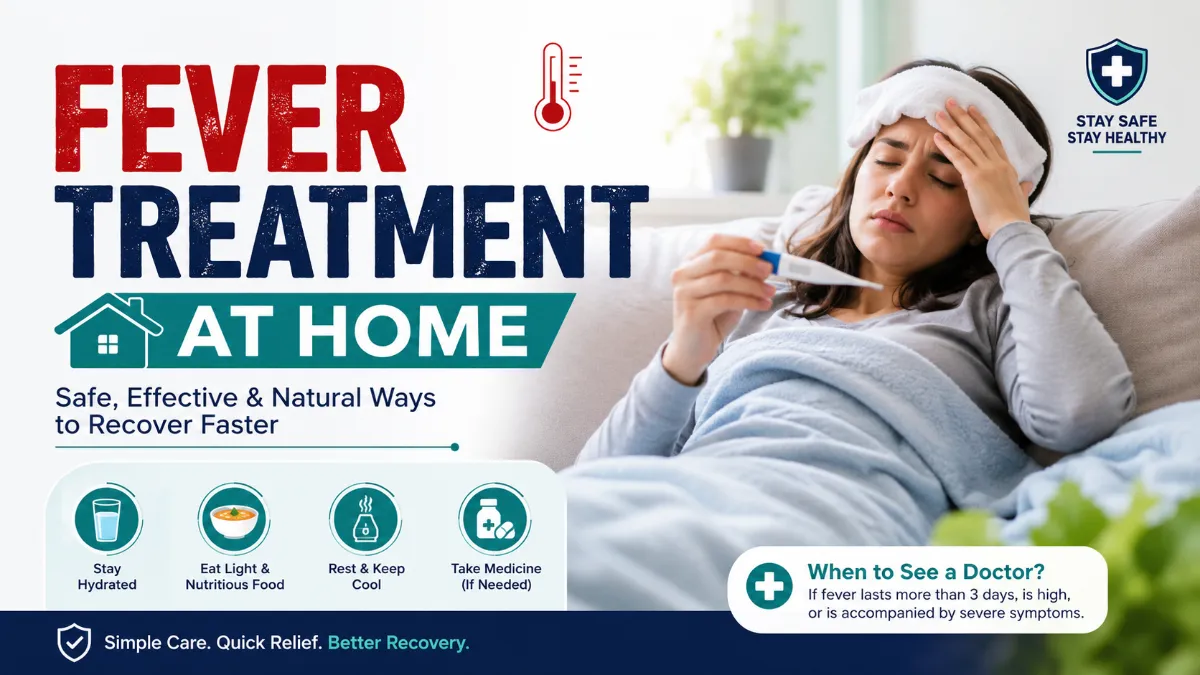
For mild to moderate fever (38°C–39.4°C) in otherwise healthy adults and children over 6 months, the following evidence-based steps are safe and effective, according to NHS and Mayo Clinic guidance.
Step 1 – Hydrate Immediately and Consistently
Fever accelerates fluid loss through sweating. Dehydration is the most common and most preventable complication of fever. Drink water, oral rehydration solution (ORS), or diluted juice. Adults need 2–3 litres daily. Children need weight-appropriate ORS as directed on the packaging. Watch for dark urine, dry mouth, or no urination for 8+ hours – these are signs of significant dehydration.
Step 2 – Rest Completely
Rest is not optional – it is therapeutic. The immune system repairs most efficiently during sleep, when growth hormones and immune cells are most active. Avoid work, exercise, and physical exertion until you have been fever-free for at least 24 hours without medication.
Step 3 – Dress Lightly and Manage Your Environment
Use one thin layer of clothing and a single light bed covering. Avoid piling blankets when feeling chilled – this traps heat inside the body and prevents natural cooling. Keep room temperature comfortable (20–22°C) with good ventilation.
Step 4 – Lukewarm Sponging for Comfort
Apply a damp lukewarm (not cold) cloth to the forehead, neck, and wrists for temporary comfort. The NHS specifically warns against cold water or ice baths, which trigger shivering and paradoxically raise core temperature by causing blood vessels to constrict.
Step 5 – Take Fever Medicine When Uncomfortable
Take paracetamol or ibuprofen when fever causes significant discomfort – not automatically at every temperature reading. Fever is doing an immune job. Treat it when it impairs eating, hydration, sleep, or normal breathing.
Step 6 – Eat Lightly and Wisely
Soup, broth, rice, banana, and toast are ideal choices during a fever. Loss of appetite is a normal immune response – do not force large meals. Light, easily digestible nutrition actively supports recovery and immune function.
Fever Medicines: What to Take, When, and How
Choosing the right fever medicine and using it correctly is one of the most important parts of safe fever treatment at home.
Antipyretic Medicine Comparison
| Medicine | Common Names in India | Onset | Duration | Safe For | Avoid If |
| Paracetamol | Crocin, Calpol, Dolo-650, P-500 | 30–45 min | 4–6 hours | Adults, children, pregnant women | Liver disease, heavy alcohol use |
| Ibuprofen | Brufen, Advil, Nurofen, Ibugesic | 20–30 min | 6–8 hours | Adults, children over 6 months | Kidney disease, peptic ulcer, 3rd trimester pregnancy, aspirin allergy |
Critical Safety Rules for Fever Medicines
- Never exceed the recommended dose. Paracetamol overdose is one of the leading causes of acute liver failure – and the damage may not produce obvious symptoms immediately.
- Check all combination medicines for paracetamol content. Most cold and flu products, cough syrups, and combination pain relief tablets already contain paracetamol. Taking these alongside Crocin or Dolo-650 can cause a dangerous accidental overdose.
- Never give aspirin to anyone under 16 years old. It carries a risk of Reye’s syndrome – a rare but life-threatening neurological and liver condition.
- Always take ibuprofen with food or milk to protect the stomach lining. Avoid it if you have a history of peptic ulcers or acid reflux.
- Pregnant women should consult a doctor before taking any fever medicine, including paracetamol, during pregnancy.
Common Mistake: “I’ll take both paracetamol and ibuprofen together for a faster result.” Taking both simultaneously is not recommended without medical supervision and significantly increases the risk of dosing errors and organ stress. If a child’s high fever is not sufficiently managed by one medicine, alternating them under medical guidance may be appropriate – but never decide this on your own.
Fever Treatment by Age Group
Fever Treatment at Home for Adults
Most healthy adults with a fever below 39.4°C and no alarming symptoms can safely manage with home care. Take paracetamol or ibuprofen as directed, push 2–3 litres of fluids daily, and rest from work and physical activity until fever-free for 24 hours without medication. Seek same-day medical care if fever exceeds 39.4°C, lasts more than 3 days, or if any warning symptoms develop.
Fever in Children: Age-Specific Guidance
- Under 3 months: Any temperature ≥38°C is a medical emergency. Go to A&E immediately – do not attempt home fever treatment.
- 3 months to 5 years: Fever ≥38.9°C lasting more than 2 days, or any fever with refusal to feed, persistent crying, or rash, needs same-day medical review.
- 6 months and older: Weight-based paracetamol dosing per product label is appropriate. Ibuprofen is safe from 6 months of age.
- Under 16 – never give aspirin. The risk of Reye’s syndrome is real and serious.
Scenario: A healthy 4-year-old with a 38.7°C fever, mild runny nose, and who is still drinking and playing normally is very likely experiencing a routine viral illness. Maintain fluids, monitor temperature twice daily. If a rash appears, she refuses fluids, or her fever climbs above 39.5°C – contact a doctor immediately.
Note on febrile seizures: Only about 4% of children under 5 are susceptible to febrile seizures. While frightening to witness, febrile seizures do not cause brain damage or long-term neurological harm in the overwhelming majority of children. Stay calm, place the child on their side, time the seizure, and call emergency services if it lasts more than 5 minutes.
Fever in Elderly Adults (65+)
Older adults may not mount a strong fever response, meaning even a 38°C temperature can signal a serious underlying infection such as pneumonia, UTI, or sepsis. The CDC confirms that adults 65 and older face a significantly higher risk of complications and should seek medical evaluation earlier – do not wait for a high reading. Dehydration also progresses faster in older adults. Even mild confusion alongside a low-grade fever in an elderly person is a medical red flag that requires same-day evaluation.
Scenario: A 72-year-old man with a 38°C fever, mild confusion, and reduced appetite should be seen by a doctor the same day – even though the temperature seems low. In elderly patients, the severity of infection does not always correlate with the height of the fever.
India-Specific Guidance: Dengue, Malaria, and Typhoid Season
In India, fever treatment at home must account for seasonal fever risks that standard international guides overlook. During the monsoon season (June–November), dengue, malaria, and typhoid are all active, and standard viral fever management may not be appropriate for these illnesses.
Dengue Fever
Dengue typically presents with sudden high fever (39–40°C), severe headache, pain behind the eyes, joint and muscle pain, and a characteristic skin rash. The most dangerous phase – severe dengue – begins after the fever drops, usually around Day 4–5, when platelet counts fall and plasma leakage can rapidly escalate to a medical emergency.
Dengue Platelet Guidance:
- Platelet counts typically begin declining 3–5 days after fever onset
- Counts below 1,00,000/µL indicate significant dengue – daily monitoring required
- Counts below 50,000/µL with any bleeding signs require immediate hospitalisation
- Myth: “I need a platelet transfusion as soon as my count drops.” Reality: Most dengue patients recover with adequate IV or oral fluids alone. Platelet transfusion is indicated only in active severe bleeding, not for low numbers alone. (Source: Ministry of Health, National Guidelines for Clinical Management of Dengue Fever, 2023)
When to test: Order a CBC + Dengue NS1 Antigen test on Day 1–5 of fever during the monsoon season. NS1 sensitivity is over 90% with ELISA-based testing in early infection.
Malaria
Malaria presents with cyclic fever patterns – chills, shaking, high fever, and sweating recurring every 24–72 hours depending on the parasite species. It is most prevalent in Odisha, Jharkhand, Chhattisgarh, Assam, and the tribal areas of MP and Gujarat. Request a Malaria RDT (Rapid Diagnostic Test) and peripheral blood smear alongside CBC if you are in or have returned from these zones. Malaria can be fatal within hours if untreated – do not delay testing.
Typhoid Fever
Typhoid classically presents with a step-wise rising fever – temperature escalates daily for 3–5 days, often reaching 39–40°C. Unlike viral fever, appetite loss, abdominal discomfort, and constipation or diarrhoea are common hallmarks. A Widal test or blood culture is appropriate after 5–7 days of persistent fever. Never self-prescribe antibiotics for typhoid – antibiotic resistance is a growing clinical concern across India.
When to get tested in India: Request a fever panel (CBC + CRP + Dengue NS1 + Malaria RDT) if fever persists beyond 3 days during the monsoon season, especially when accompanied by rash, joint pain, severe headache, or abdominal symptoms.
Can Fever Cause Brain Damage?
No – fever from infection does not cause brain damage. This is one of the most widely believed and most harmful fever myths.
Only temperatures above 42°C (107.6°F) can potentially cause neurological damage. Temperatures this extreme almost never occur from infection alone – they are typically caused by environmental hyperthermia, such as a child left in a locked car in peak summer heat. Standard high fevers from flu, dengue, or bacterial infection do not reach this threshold.
Febrile seizures – though alarming to witness – also do not cause brain damage, learning difficulties, or future seizure disorders in the vast majority of children, according to peer-reviewed paediatric clinical literature. The most dangerous real complication of fever is dehydration, not neurological injury. Focus your energy on maintaining fluid intake, not suppressing every degree of temperature.
What NOT to Eat During Fever
Food and drink choices during fever directly affect recovery speed, medication safety, and hydration status. This is a consistently overlooked aspect of fever treatment at home.
Foods and Drinks to Avoid
- Fried, oily, or heavy foods – harder to digest when the gut is inflamed
- Spicy foods – worsen nausea and amplify temperature discomfort
- Caffeine (tea, coffee, energy drinks) – diuretic effect worsens dehydration
- Alcohol – dehydrating, impairs immune function, and creates liver stress when combined with paracetamol
- Full-fat dairy (cream, full-fat cheese) – can cause nausea and bloating during gut inflammation
- Sugary drinks and packaged juices – spike blood sugar without effective hydration
Best Foods to Eat During a Fever
- ORS, coconut water, clear soups, and broths – best for rehydration
- Rice, bananas, toast, boiled vegetables – easy to digest, restore energy
- Light dal or khichdi – especially suitable for Indian readers managing fever at home
- Warm turmeric milk (haldi doodh) – has mild anti-inflammatory properties and soothes the throat, though it does not replace clinical treatment
How Do You Know You Are Recovering?
Many people do not know what genuine recovery looks like and continue taking antipyretics unnecessarily or panic when residual fatigue lingers after a fever.
Clear signs of recovery include:
- The temperature returns to below 37.5°C without medicine for at least 24 hours
- Appetite gradually returns – even mild hunger is a positive clinical sign
- Urination normalises – light yellow urine indicates proper hydration
- Energy begins improving – you feel less exhausted between rest periods
- Headache and body aches reduce in intensity each day
You are not truly recovered simply because a thermometer reads normal after taking medicine. Wait until the temperature stays normal for 24 hours without antipyretics before returning to work, school, or normal physical activity.
What to Avoid During Fever Treatment
- Ice baths or cold water sponging – Triggers shivering and paradoxically worsens fever
- Aspirin in anyone under 16 – Reye’s syndrome risk
- Self-prescribing antibiotics – Never appropriate for viral fever
- Heavy blankets during chills – Prevent cooling and worsen heat retention
- Stacking paracetamol products – Accidental overdose is a real and serious risk
- Skipping fluids – Dehydration is the most common preventable complication of fever
- Fasting – Light nutrition actively supports immune function and recovery
- Ignoring fever in high-risk individuals – Infants, the elderly, pregnant women, and those with chronic illness need lower-threshold, earlier medical evaluation
When to See a Doctor
Effective fever treatment at home has limits. See a doctor within 24 hours if:
- Fever above 39.4°C not responding to home care in an adult
- Fever lasting more than 3 days in adults or more than 2 days in children
- Any fever in an infant under 3 months – always a medical emergency
- Persistent vomiting preventing fluid intake
- Any fever in an elderly person with confusion or weakness
- Fever during or after travel to a malaria or dengue-endemic region
Go to Emergency Immediately If:
- Stiff neck with fever – meningitis must be ruled out
- Skin rash that does not fade when a glass is pressed against it
- Seizures or convulsions lasting more than 5 minutes
- Severe breathing difficulty or chest pain
- Extreme confusion or inability to wake
- Temperature above 40°C (104°F) not reducing with medication
Frequently Asked Questions
Should you always treat a fever with medicine?
No. Mild fevers below 38.9°C that are not causing significant discomfort may not require medication. Fever is an active immune tool – it can help fight infection by impairing pathogen replication and activating immune cells. Take medicine when fever causes distress, dehydration risk, impaired sleep, or difficulty eating.
What is the fastest way to reduce fever at home?
The fastest evidence-based approach to fever treatment at home is taking paracetamol or ibuprofen at the correct dose, drinking fluids immediately, resting, and applying lukewarm sponging. Most fevers begin improving within 30–60 minutes of appropriate medication. Avoid cold water or ice, which worsen shivering.
What temperature is considered dangerous?
A fever becomes medically concerning above 39.4°C (103°F) in adults when it does not respond to home treatment. A fever above 40°C (104°F) always requires urgent care. In infants under 3 months, any temperature of 38°C or above is a medical emergency.
What is the difference between viral and bacterial fever?
Viral fevers usually improve within 3–7 days and include body aches, fatigue, and runny nose. Bacterial fevers are more likely to stay high, worsen over time, and cause localised symptoms such as chest infection, sore throat with pus, or painful urination. Antibiotics only treat bacterial fever and must never be self-prescribed.
Why does fever get worse at night?
Cortisol – which suppresses immune activity – drops naturally at night, allowing the immune system to become more active and release more fever-producing compounds. This is normal circadian biology, not a sign of worsening illness. Monitor for emergency warning signs rather than reacting to nighttime temperature spikes alone.
Can fever cause brain damage?
No. Fever from infection does not cause brain damage. Only temperatures above 42°C – almost never caused by infection alone – carry neurological risk. Febrile seizures, though alarming, do not cause brain damage or long-term neurological harm in the vast majority of children.
What should I eat and drink during fever?
Focus on ORS, coconut water, clear soups, rice, bananas, and toast. Avoid caffeine, alcohol, spicy foods, and fried food. Light, easily digestible meals support immune function. Staying hydrated is the single most important dietary priority during any fever.
When should I get blood tests during fever in India?
If fever persists beyond 3 days, especially during monsoon season, a fever panel including CBC, CRP, Dengue NS1 Antigen, and Malaria RDT is clinically appropriate. If you are in or have returned from a malaria-endemic region, prioritise a blood smear and RDT alongside CBC without delay.
How do I know if I am recovering from fever?
You are genuinely recovering when your temperature stays below 37.5°C for 24 hours without taking any medicine, your appetite begins returning, urination normalises, and your energy improves each day progressively. Returning to work or exercise before this point delays recovery and risks relapse.
Is fever after vaccination normal?
Yes. A low-grade post-vaccination fever (usually 37.5°C–38.5°C) is a normal and expected immune response that typically resolves within 1–2 days. Paracetamol can be taken for comfort. A fever above 39°C or fever persisting beyond 2 days after vaccination should prompt medical review.
Disclaimer: This content is for informational purposes only and is not a substitute for professional medical advice. Always consult a qualified healthcare provider for personalised guidance.