
Most people take ibuprofen without a second thought. It is available at every pharmacy, costs almost nothing, and works fast. That familiarity is exactly what makes it dangerous.
Over 1 in 5 regular ibuprofen users develops silent stomach damage — without any warning signs. Kidney stress, cardiovascular risk, and dangerous drug interactions build quietly in the background while the pain disappears from the surface.
This guide does not just tell you what ibuprofen is. It tells you when to take it, when to stop, when to choose something else, and when to go to a hospital. If you have ever reached for ibuprofen without reading the label, this is the guide you should have read first.
What Is Ibuprofen?
Ibuprofen is a nonsteroidal anti-inflammatory drug (NSAID) that blocks COX-1 and COX-2 enzymes, reducing production of prostaglandins — the chemicals responsible for pain, fever, and swelling.
It is available as:
- Oral tablets and capsules (most common)
- Children’s suspension (liquid, weight-based dosing)
- Topical gels and sprays (localised pain relief)
- Prescription-strength tablets (higher doses, doctor supervised)
Should You Take Ibuprofen? (Visual Decision Framework)
Take ibuprofen if you have pain with inflammation — muscle injury, arthritis, or menstrual cramps. Avoid it if you have stomach ulcers, kidney disease, or are pregnant. For fever without inflammation, paracetamol is usually the safer option.
Take ibuprofen if:
- Pain comes with visible swelling (sprain, arthritis, injury)
- You have menstrual cramps
- You have fever above 38.5°C and no stomach or kidney issues
- You are a healthy adult with no contraindicated conditions
Choose paracetamol instead if:
- Fever exists without inflammation
- You are pregnant
- You have a history of stomach ulcers or kidney problems
- You are managing long-term or daily pain
Avoid ibuprofen completely if:
- You have an active or previous stomach ulcer
- You have kidney, liver, or severe heart disease
- You have had a heart attack or stroke
- You are in the second or third trimester of pregnancy
- You have a diagnosed NSAID or aspirin allergy
- You have chickenpox
Action: Uncertain which category applies to you? Call your pharmacist before taking. This is a two-minute conversation that can prevent serious harm.
Ibuprofen Uses: When and Why It Works
Common OTC Uses
| Condition | Why Ibuprofen Is Effective |
| Headache and migraine | Reduces prostaglandin-driven pain signals |
| Period pain (dysmenorrhea) | Blocks uterine prostaglandins causing cramps |
| Toothache | Reduces dental nerve inflammation |
| Back pain and muscle strain | Anti-inflammatory action on soft tissue |
| Fever | Lowers prostaglandin activity in the brain’s temperature centre |
| Sore throat and sinus pain | Reduces mucosal inflammation |
| Arthritis (mild to moderate) | Reduces joint inflammation and stiffness |
Prescription-Strength Uses (Doctor Supervised Only)
- Rheumatoid arthritis and osteoarthritis
- Ankylosing spondylitis
- Post-surgical pain management
- Pericarditis (inflammation around the heart)
- Patent ductus arteriosus closure in premature newborns
Dosage: Safe General Guidance
Golden Rule: Use the lowest effective dose for the shortest possible time.
Adult Dosage Table
| Purpose | Dose | Frequency | Max Per Day (OTC) |
| Pain / Fever | 200–400 mg | Every 4–6 hours | 1,200 mg |
| Menstrual cramps | 400 mg | Every 4 hours | As directed |
| Arthritis (prescription) | 400–800 mg | 3–4 times daily | 3,200 mg |
Children’s Dosage
- Fever: 5–10 mg/kg every 6 hours; maximum 40 mg/kg per day
- Anti-inflammatory: 20–40 mg/kg per day in divided doses
- Under 6 months: Do not use without a doctor’s prescription
Dosage Safety Checklist
- Always take with food or milk — never on an empty stomach
- Do not take for more than 3 days for fever without medical advice
- Do not take for more than 5 days for pain without medical advice
- Never double the dose if a dose is missed
- Do not crush sustained-release tablets
What is the safe dose of ibuprofen?
The safe OTC dose for adults is 200–400 mg every 4–6 hours, with a maximum of 1,200 mg per day. Prescription doses may go up to 3,200 mg per day under medical supervision. Always take ibuprofen with food.
Read the detailed guide on: [Ibuprofen Dosage by Age and Weight — Complete Reference Table]
The Hard Truths: What Most People Get Wrong
90% of people who misuse ibuprofen do so by taking it on an empty stomach. This is the fastest way to damage your stomach lining — and the damage can be silent for weeks before symptoms appear.
| Myth | Hard Truth |
| It’s safe — it’s sold over the counter. | Even short-term misuse causes silent GI damage in 1 in 5 regular users. |
| Taking more gives faster relief. | Higher doses increase toxicity without meaningfully improving pain control. |
| Ibuprofen treats the infection. | It only manages symptoms. It does not kill bacteria or viruses. |
| Topical gel is just as risky. | Gel has far lower systemic absorption — significantly safer for the stomach. |
| Occasional alcohol is fine. | Even one alcohol + ibuprofen combination raises GI bleeding risk. |
| Early pregnancy is safe. | Ibuprofen should be avoided at all stages; risk escalates significantly after 20 weeks. |
| It is fine long-term with no symptoms. | Kidney damage and cardiovascular risk build silently with prolonged use. |
Biggest Mistakes Doctors See
These are the most frequently observed errors in clinical practice:
- Taking ibuprofen on an empty stomach — the single most common cause of ibuprofen-related GI injury
- Self-medicating chest pain or abdominal pain with ibuprofen instead of seeking urgent evaluation
- Combining ibuprofen with aspirin — cancels aspirin’s cardioprotective effect and doubles GI risk
- Giving adult tablets to children without weight-based calculation
- Using ibuprofen daily for chronic pain for weeks without a medical review
- Not disclosing ibuprofen use to prescribing doctors — leads to dangerous drug interactions with warfarin, SSRIs, and diuretics
Dr. Sharma notes: “The patients I see most often with ibuprofen-related complications are those who assumed it was harmless because they bought it without a prescription. OTC does not mean risk-free.”
A 32-year-old woman has severe menstrual cramps. She takes 400 mg ibuprofen with breakfast every 6 hours for two days. Pain is controlled. She stops after her period ends. This is correct use.
Side Effects: What to Watch vs. What Demands Action
Common Side Effects (Usually Mild and Temporary)
- Nausea, heartburn, indigestion
- Loose stools or constipation
- Mild dizziness or headache
- Ankle swelling or fluid retention
- Slight rise in blood pressure
Serious Side Effects — Stop Immediately and Seek Emergency Care
- Black, tarry, or bloody stools (GI bleeding)
- Vomiting blood or coffee-ground material
- Chest pain or sudden shortness of breath
- Swollen face, lips, tongue, or throat (anaphylaxis)
- Significant drop in urination
- Yellowing of skin or eyes (jaundice)
- Severe skin rash or blistering
- Worsening asthma or new wheeze
Hard rule: If any of the above appears — stop ibuprofen immediately, take no further dose, and go to an emergency room. Do not wait to see if it improves.
What are common ibuprofen mistakes?
Taking ibuprofen on an empty stomach, exceeding the recommended dose, using it beyond 5 days without medical advice, and combining it with other NSAIDs or alcohol — all of these significantly increase the risk of stomach bleeding.
Read the detailed guide on: [Ibuprofen Side Effects: Full List, Risk Factors and Management]
Precautions: High-Risk Groups
Pregnancy
- After 20 weeks: Can reduce amniotic fluid and impair fetal kidney development
- Third trimester: Strictly contraindicated — risk of premature ductus arteriosus closure
- At any stage: Paracetamol (under doctor guidance) is the preferred alternative
Elderly Patients (65+)
- Higher risk of GI bleeding, kidney impairment, and cardiovascular events
- Start at the lowest effective dose
- Require medical review for any use beyond 3–5 days
Children Under 6 Months
- Do not use without explicit doctor prescription
Breastfeeding
- Short-term, low-dose use generally considered low risk
- Confirm with your doctor or pharmacist before use
Drug Interactions: Critical Combinations
| Drug / Class | Risk |
| Aspirin | Increases GI bleeding; reduces aspirin’s heart protection |
| Warfarin / Blood thinners | Greatly elevated bleeding risk |
| ACE inhibitors / Diuretics | Reduces their effect; stresses kidneys |
| Other NSAIDs | Dangerous — never combine |
| Corticosteroids (e.g., prednisolone) | Major GI ulcer risk |
| Lithium | Raises lithium to toxic levels |
| Methotrexate | Increases methotrexate toxicity |
| SSRIs (antidepressants) | Elevated GI bleeding risk |
Always disclose ibuprofen use to every doctor and pharmacist, including when buying it OTC.
Read the detailed guide on: [Ibuprofen Drug Interactions: What You Must Know Before Combining Medicines]
Ibuprofen vs. Other Pain Relievers
| Feature | Ibuprofen | Paracetamol | Aspirin | Naproxen |
| Reduces inflammation | Yes | No | Yes | Yes |
| Fever relief | Yes | Yes | Yes | Yes |
| Safe for stomach ulcers | No | Generally yes | No | No |
| Safe in pregnancy | Avoid | Preferred | Avoid | Avoid |
| Safe for elderly | Use caution | Generally safer | Use caution | Use caution |
| Duration of action | 4–6 hrs | 4–6 hrs | 4–6 hrs | 8–12 hrs |
| Best suited for | Inflammation + pain | Fever + mild pain | Cardio prevention (prescribed) | Long-acting arthritis pain |
Quick decision guide:
- Pain with swelling → Ibuprofen
- Fever without inflammation → Paracetamol
- Long-acting arthritis → Naproxen (doctor supervised)
- Cardiovascular prevention → Low-dose Aspirin (doctor prescribed only)
Read the detailed guide on: [Ibuprofen vs Paracetamol vs Naproxen: Which Painkiller Should You Choose?]
Overdose: Hard Warnings
- OTC daily maximum (adults): 1,200 mg
- Prescription maximum (adults): 3,200 mg
- Children: Toxic effects can begin around 400 mg/kg
Signs of overdose:
- Severe nausea, vomiting, stomach pain
- Drowsiness, confusion, or seizures
- Laboured or irregular breathing
- Acute kidney failure
If overdose is suspected → Call emergency services immediately. Do not wait.
When to See a Doctor: Behavioural Triggers
| Situation | Required Action |
| Fever lasting more than 3 days | Stop ibuprofen — see a doctor today |
| Pain lasting more than 5 days | Stop ibuprofen — book a medical review |
| Black or bloody stools | Emergency room immediately |
| Face, throat, or tongue swells | Emergency room immediately |
| Child under 3 months has fever | See a doctor before giving any medicine |
| Taking ibuprofen daily for one week or more | Medical review required — do not continue without guidance |
| Pain is new, severe, or unexplained | Do not self-medicate — see a doctor first |
FAQs
What is ibuprofen used for?
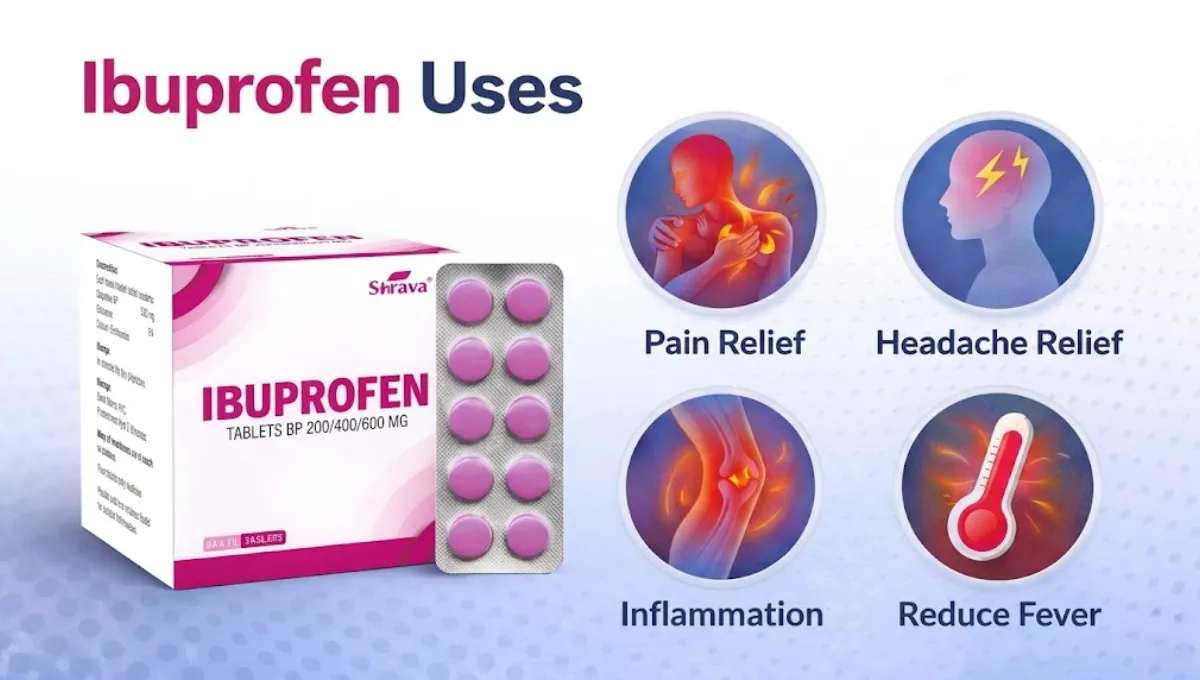
Ibuprofen relieves mild to moderate pain, reduces fever, and treats inflammation. Common uses include headaches, toothaches, period pain, arthritis, and muscle injuries. It works by reducing prostaglandins that cause pain and swelling.
How much ibuprofen can I take safely?
Adults using OTC ibuprofen should not exceed 1,200 mg per day (200–400 mg every 4–6 hours). Prescription doses may reach 3,200 mg per day under medical supervision. Always take with food.
When should I avoid ibuprofen?
Avoid ibuprofen if you have stomach ulcers, kidney or liver disease, heart problems, or are in late pregnancy. Also avoid it with an NSAID allergy or if you are on blood thinners.
Can I take ibuprofen every day?
No. Daily unsupervised use increases risk of GI bleeding, kidney damage, and cardiovascular events. If you need daily pain relief beyond 5 days, see a doctor for a proper treatment plan.
Is ibuprofen gel safer than tablets?
Yes. Topical gel has significantly lower systemic absorption, making it much safer for the stomach and suitable for localised joint or muscle pain.
Can ibuprofen and paracetamol be combined?
In many cases yes — they act via different mechanisms. They can be alternated for stronger pain relief. Always confirm the combination with your pharmacist, particularly if you are on other medications.
Can ibuprofen cause a heart attack?
Long-term, high-dose use — especially in people with pre-existing heart disease — carries elevated cardiovascular risk. Short-term OTC use at recommended doses carries a significantly lower risk.
Is ibuprofen safe for children?
Children over 6 months can take ibuprofen at weight-based doses (5–10 mg/kg every 6 hours). Always use the measuring syringe provided. Children under 6 months require a doctor’s prescription.
What happens if I take ibuprofen without food?
It irritates the stomach lining directly, leading to nausea, ulcer risk, and — with repeated use — potential GI bleeding. Always take with food or milk.
Medical Disclaimer: This article is intended for informational and educational purposes only. It does not constitute medical advice, diagnosis, or prescription. Always consult a registered healthcare professional before starting, stopping, or changing any medication. Medical guidelines may vary by country. This content reflects guidance from WHO-aligned sources including NHS, HSE Ireland, and Healthdirect Australia as of April 2026.